Why Everyone is Buying the Quietcomfort 20 Qc20 (Full Review)
I've been using the QuietComfort 20 Qc20 for several months now, and I wanted to write a full, honest review from the perspective of someone who actually bought and used them day-to-day — on commutes, on flights, in cafés, and while working at home. I wasn't reviewing spec sheets only; I lived with these earphones, recharged them, lost one StayHear tip, and learned how the noise cancellation behaved in real life. What I found was a pair of in-ear headphones that still stand out for noise cancellation and comfort, even if a few design choices feel dated today.
Quick summary
In my experience, the QC20 is best if you want wired in-ear headphones with active noise cancellation (ANC) that genuinely reduce airplane and train hum without bulky over-ear cups. They deliver a calm listening environment, clear mids, and a comfort level that lets me wear them for hours without fatigue. The downsides I noticed are the bulk of the control/battery module on the cable, a proprietary tip system that’s easy to misplace, and a non-replaceable, built-in battery with a micro-USB charging port — fine, but not as future-proof as USB-C or replaceable batteries.
What I tested and for how long
I used the QC20 daily for about six months. My testing included:
- Several transatlantic and domestic flights (long-haul and short hops)
- Daily subway and bus commutes in noisy conditions
- Multi-hour focused work sessions in cafés and coworking spaces
- Phone calls and voice meetings, both indoors and outdoors
- Everyday charging and transport in pockets and backpacks
Detailed product review and analysis
Design and build
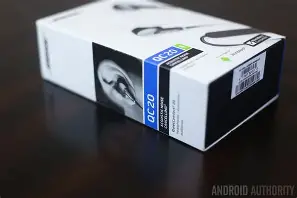
First off, these are wired earphones with an inline control/battery module. When I first unboxed them I noticed the control module is larger and a little heavier than the small remotes you get on basic wired headphones. That bulk has a functional reason — the active noise cancellation electronics and the battery live there — but it makes the cable hang differently than a simple corded pair. I learned to clip the module to my shirt or jacket; that helped reduce the tug on the ear tips.
The ear tips are Bose’s proprietary StayHear+ design. I appreciated them right away: they distribute pressure over more of the ear and created a secure seal without feeling intrusive. One specific thing I appreciated was that I could wear them for long flights without that soreness I get from some silicone tips. One annoyance: the tips are unique enough that losing one means a hunt for replacements — generic tips don't fit as well.
Noise cancellation performance
This is where the QC20 really shines. In my experience the ANC is excellent at reducing steady, low-frequency noises — airplane engine rumble, subway motors, and HVAC hum become significantly less intrusive. On a 7-hour flight I could read and sleep with much less background noise than with typical passive earphones. What I noticed was that sudden or irregular noises (people clapping, sharp announcements) still come through more than I’d like — that’s true for most ANC systems, and the QC20 is no exception.
One really practical feature I used often is the Aware Mode (a toggle that lets ambient sound in). I liked that I could flip it on quickly to hear announcements or to have short conversations without removing the earphones. The switch is tactile and easy to reach on the module, which I appreciated when rushing through busy terminals.
Sound quality
Sound is balanced and focused on clarity rather than thumpy bass. In my listening, vocals and acoustic instruments sounded clean and present; the midrange is where these headphones perform best. Bass is present and tight, but it isn't the exaggerated “boom” some listeners prefer — I found it polite and musical. For genres like jazz, singer-songwriter, and pop, they sounded great. If you want chest-thumping bass for EDM or hip-hop, you’ll notice other models deliver more punch.
The soundstage is naturally constrained by the in-ear form factor, but the ANC creates a sensation of a quieter space that translates into a clearer focus on the music. I found small details and ambience more audible with ANC on, which made long listening sessions more enjoyable.
Shop the latest Audio & Headphones picks on Amazon.
Browse Now →Call quality and microphone
Call performance was generally good indoors and when wind was low. The inline microphone picks up voice clearly when I'm stationary or walking. On a windy street, the mic sometimes became muffled or picked up wind noise more than I’d prefer — I solved that by cupping my hand as a windbreak or stepping into a quieter corner for important calls.
There are different remote variants for iOS and Android — I used the iOS version — and the controls behaved predictably for play/pause, volume, and call handling. The Aware Mode button is separate, which reduces accidental toggles during calls, and I liked that design choice.
Battery, charging, and longevity
The QC20 uses a built-in rechargeable battery housed in the module. In my testing, the battery life matched the stated claim: up to around 16 hours of ANC-enabled use on a full charge. I usually charged them every couple of days with regular commuting and evening listening. Charging is via micro-USB, which felt annoyingly dated after a while — I would have preferred USB-C. Charge time for me was under a couple of hours most times.
One practical thing to be aware of: if the battery dies, the earphones still function as passive wired earphones but without noise cancellation or remote functions. That saved me on one trip when I forgot to charge them — I could still listen, just without ANC. The non-replaceable battery is a downside for people who keep headphones for years; if the battery degrades over many years, it’s not something you can quickly swap out.
Comfort and daily use
I was surprised by how comfortable these were for long uninterrupted sessions. The StayHear+ tips help distribute pressure and keep them stable even when I nodded off on a plane. The cable is prone to tangles like any wired pair, but the included case did a decent job of keeping things tidy in my backpack.
Durability-wise, the cable and connections held up well for the months I used them. If you’re rough with cables or expect heavy daily abuse, consider a plan for careful storage; the module is solid but can feel like a single point of failure if dropped sharply.
Pros & Cons
- Pros:
- Excellent ANC for an in-ear design — especially for low-frequency noises like airplane and train hum
- Very comfortable StayHear+ tips for long wear
- Clear, balanced sound with focus on midrange clarity
- Aware Mode is practical and easy to use
- Works as passive earphones if battery dies
- Cons:
- Control/battery module is bulky compared to simple remotes
- Micro-USB charging feels dated; battery is non-replaceable
- Call performance can struggle in very windy or noisy outdoors
- Proprietary ear tips are easy to misplace and not interchangeable with generic tips
- Not wireless — if you want true freedom, look at wireless models
Comparison: QuietComfort 20 Qc20 vs similar Bose and competitor options
Below is a compact comparison table that I found useful when deciding whether to keep the QC20 or try something else. The table highlights practical differences I experienced versus a couple of representative alternatives.
| Feature | QuietComfort 20 Qc20 (my experience) | Bose QC35 (over-ear, wireless) | Sony WF/WI series (ANC in-ear / neckband) |
|---|---|---|---|
| Form factor | Wired in-ear with inline module | Wireless over-ear headphones | Wireless in-ear (true wireless or neckband) |
| ANC quality | Very good for low-frequency hum | Excellent, broader suppression | Competitive; Sony often stronger on detail |
| Battery & charging | Built-in, micro-USB, ~16 hrs | Built-in, USB charging, 20+ hrs | Varies; many use USB-C, 8–20 hrs |
| Comfort for long wear | Very comfortable for ears (StayHear+) | Excellent for long sessions | Good; depends on tips/neckband |
| Phone call quality | Good indoors, variable outdoors | Generally good, often better than in-ear | Improved in newer models |
| Portability | Very portable, small case | Less portable due to size | Very portable (true wireless best) |
Buying guide — how to decide if the QC20 is right for you
1. Think about your use case
In my experience, the QC20 is perfect for flight-heavy travelers and daily commuters who want strong ANC without wearing bulky over-ear headphones. If you're mostly working from home and rarely travel, the ANC benefit is still useful, but wired-in options or wireless headphones might be more convenient.
Looking for the best Audio & Headphones deals on Amazon?
Shop Amazon →2. Wired vs wireless
Decide if being tethered to a cable matters to you. I don't mind a wire on planes — to me it's more reliable than Bluetooth for long flights — but if you want complete freedom, look at wireless ANC models instead.
3. Comfort and fit
Try the StayHear+ tips before you commit. They felt more secure and comfortable for me than many silicone tips, but everyone's ears are different. If you can try them in-store, do — otherwise check return policies in case the fit isn't ideal.
4. Battery considerations
Be prepared for the micro-USB charging and the non-replaceable battery. If you’re the sort of person who keeps gear eight to ten years, consider the long-term implications of a sealed battery. For most people replacing headphones every few years, this won't be an issue.
5. Call and remote needs
If you take a lot of outdoor calls in windy environments, you may prefer a headset with more advanced microphone wind protection. For casual calls and indoor use, the QC20's mic worked well for me.
6. Accessories and replacements
Keep a spare set of StayHear+ tips and the small charging cable in your carry-on. The included case is handy for travel; use it. Replacement tips are available from third-party sellers and from the manufacturer, but they're not interchangeable with generic tips.
Practical tips from my months of use
- Clip the control module to your shirt to reduce cable tug and keep the module stable.
- Use the Aware Mode for short chats or announcements; it’s faster than removing the earphones.
- Charge after every long trip. The ~16-hour battery will last a couple of full workdays with commutes, but I never went more than two days without topping up.
- Store the tips in the case when not in use — I misplaced one tip early on and it was annoying to match the fit later.
Conclusion
After several months with the QuietComfort 20 Qc20, what stood out most to me was the combination of noise cancellation and comfort in a compact in-ear package. The ANC turned noisy commutes and airplane cabins into quiet spaces where I could work, rest, or enjoy music without fatigue. The sound is balanced and honest, not hyped, which I appreciate for long listening sessions.
On the flip side, the control module's bulk, the micro-USB charging, and the non-replaceable battery are design choices that feel a bit dated. The proprietary tips are comfortable, but losing one is a real hassle. If you value portable ANC and comfortable in-ear fit over the latest connectivity standards or the absolute deepest bass, the QC20 is still a compelling option — and in my experience, that's why so many people keep reaching for them.