Why Everyone is Buying the Rog Strix Oled Xg27Acdng (Full Review)
Introduction — My experience in a nutshell
I've been using the Rog Strix Oled Xg27Acdng for around five months as my daily monitor for work, gaming, and photo editing. I bought it because I wanted a 27-inch display that combined the deep blacks and contrast of OLED with the responsiveness I expect from a gaming monitor. After weeks of real-world use — late-night single-player sessions, competitive matches, content creation, and routine desktop work — I feel comfortable sharing what really stands out and what you should watch out for.
First impressions and setup
Out of the box the monitor felt solid: the design has the familiar ROG aesthetic without being outrageously flashy in my office. The stand is sturdy and gives a wide range of motion — height, tilt, swivel, and a quick-release VESA plate if you want to mount it. I set it up on my desk with a DisplayPort cable and a high-end graphics card; installation was straightforward and the on-screen display (OSD) is the usual ASUS menu. I ran a basic color profile and left the factory color settings mostly intact for the first few days so I could see the stock calibration.
Image quality — what I appreciated
What I found was the thing that most people rave about: the OLED image quality is remarkable. Blacks are genuinely black, not the deep gray you get from most VA or IPS panels. That creates a contrast that makes HDR content and dark scenes in games look much more cinematic. Colors pop without being oversaturated when you use a neutral profile, and skin tones felt natural in video calls and streams.
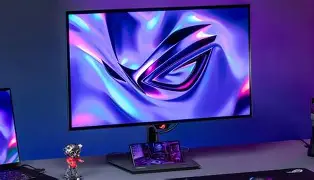
Motion clarity in fast-paced games was excellent. I noticed clear, responsive tracking of fast targets in shooters and a much more immediate feel in racing titles. Input lag has been imperceptible in my sessions; the monitor feels as responsive as other high-refresh gaming displays I've used.
Out of the box, HDR performance is noticeably better than my previous IPS panels for contrast and color depth. That said, true HDR "wow" moments depend on peak brightness, and OLED panels trade absolute peak nit brightness for inky blacks and contrast. For daytime, extremely bright HDR scenes lost a bit of their punch compared to a very bright mini-LED display, but in most real-world gaming and movie watching the result felt richer and more immersive because of the contrast.
Color accuracy and creative work
In my experience, the monitor is great for creative work after a little calibration. I ran a quick calibration session with a colorimeter and the results were reliable; color shifts were small and consistency across the screen was better than I expected. If you do professional-grade color work, you should still calibrate it, but I was happy with the accuracy for photo edits and video grading.
One practical note I noticed: because OLED reproduces deep blacks so well, it changes how you approach shadow detail in edits. I had to slightly adjust exposure and shadow sliders when switching between this monitor and my reference LCDs to maintain the same perceived balance in darker areas.
Concerns after months of use — what bothered me
There are a few honest annoyances that I noticed after long-term use. First, the perceived brightness ceiling for HDR is lower than the brightest LED-backlit monitors; if your work or viewing takes place in a very bright room, highlights won't be as blindingly bright. Second, there is the ongoing question of OLED wear: burn-in. I didn't experience any permanent burn-in during my months of mixed usage, but I did see some transient image retention if static UI elements remained on screen for hours. ASUS provides mitigation features (pixel shifting, refresh cycles, sleep timers) which helped, but it's a trade-off I would think about if your workflow has static toolbars or long-duration, unchanging interface elements.
Discover deals on Electronics — updated daily.
View Offers →Another small annoyance was the monitor's menu navigation. It's functional but sometimes a bit slow to respond when making fine adjustments; it felt slightly less snappy than some competing monitors' OSDs. The built-in speakers are serviceable for dialog but lack bass and fullness if you're used to dedicated speakers or a soundbar.
Build, ergonomics and daily comfort
The stand and build quality are solid. I appreciated the cable management loop on the stand and the general sturdiness — nothing wobbled even when I bumped the desk. Ergonomically, I used the monitor for long workdays and appreciated the wide range of adjustments. The anti-reflective coating is good enough for moderate room lighting; I still kept a desk lamp off to avoid reflections, but that’s typical for any monitor with a darker OLED surface.
Gaming performance — the nitty-gritty
After testing several multiplayer and single-player titles, I found the monitor excels in any scenario where strong contrast and quick response matter. In darker maps and shadow-heavy scenes, enemies were easier to pick out. In high-frame-rate competitive play, motion clarity and tracking were excellent, and I didn't notice ghosting or smearing that sometimes plagues OLEDs — at least not in normal gameplay. Fast-paced motion is crisp, and adaptive-sync technologies I used worked well to eliminate tearing.
That said, if you rely on extremely high sustained brightness for competitive advantages (very bright highlights making small details more visible), a very bright LCD might still have a tiny edge in those specific lighting conditions. For most players, though, the ROG Strix OLED's combination of contrast, color, and responsiveness is a major win.
Longevity and maintenance
I've taken care to use the built-in pixel refresh and to enable the automatic sleep and screen saver features. After five months I haven't seen lasting burn-in. What I noticed was that regular usage patterns — switching between games, video content, and full-screen apps — reduces the risk of static element retention. If you plan to use this monitor for static dashboards or long-duration UI work, rotate content or use OS-level auto-hide for toolbars to minimize risk.
Price and value — is it worth it?
When I bought it, I considered price versus value for my needs: gaming, content creation, and everyday use. What I found was that the premium goes to image quality and contrast rather than raw brightness or maximal HDR peak. If those qualities are important to you, the monitor offers clear value. If you prioritize absolute HDR peak brightness or completely worry-free burn-in for static displays, a high-end LCD or mini-LED might be better suited.
Pros & Cons
- Pros
- Stunning blacks and contrast — images feel more cinematic in everyday use
- Excellent color vibrancy and wide color gamut after calibration
- Responsive gaming performance with very low perceived input lag
- Solid build and ergonomic stand with VESA compatibility
- Good out-of-box experience for mixed use (games + creative work)
- Cons
- HDR peak brightness is lower than the brightest LCDs; highlights can lack "pop" in very bright rooms
- Risk of burn-in/image retention with static UI elements over long periods (mitigations exist but require discipline)
- OSD/menu navigation can feel sluggish at times
- Built-in speakers are basic — plan for external audio if you care about fidelity
- Premium price compared to mainstream IPS 1440p displays
Comparison — how it stacks up
I created a simple comparison table so you can see how the ROG Strix OLED XG27Acdng compares to typical alternatives in the 27-inch space. These are qualitative comparisons to help you decide which direction to go.
Find top-rated Electronics products at great prices.
View Offers →| Model | Panel Type | Resolution | Refresh | Best for | Notes |
|---|---|---|---|---|---|
| Rog Strix Oled Xg27Acdng | OLED | QHD (27") | High refresh (gaming-focused) | Gamers who value contrast & color, content creators wanting deep blacks | Outstanding contrast and color; moderate HDR peak brightness; requires burn-in precautions |
| Typical 27" IPS 1440p 144Hz | IPS | QHD | 144Hz | Balanced gaming + productivity on a budget | Brighter highlights, wider availability, lower cost; blacks are not as deep |
| 27" 4K OLED / High-end mini-LED | OLED or mini-LED | 4K | High refresh (varies) | Creators needing more pixels or extreme HDR brightness | More pixels or higher HDR peak; usually more expensive; may require different GPU power |
Buying guide — what to check before you buy
I've been through the process, so here are the practical questions I asked myself and the checks I ran before committing:
- How will I use it day-to-day? — If your use is a mix of gaming and content creation, OLED's contrast and color are a big win. If you run static dashboards or 24/7 signage, reconsider due to burn-in risk.
- Do I need extreme HDR brightness? — If you want the absolute brightest HDR highlights for certain professional HDR workflows, research peak nit numbers and compare to mini-LED alternatives.
- Is my GPU ready for the resolution and refresh? — QHD at very high refresh rates demands a capable GPU if you want to take full advantage of the monitor in gaming. Check your typical frame rates in titles you play.
- What mitigation tools are provided? — Confirm the monitor includes pixel refresh, screen savers, and auto-dim/sleep options — and use them regularly.
- Warranty and service policy — Ask about OLED panel coverage and replacement policy for burn-in. Different regions and retailers have varying terms.
- Connectivity — Ensure the monitor has the inputs you need (DisplayPort, HDMI, USB) and supports adaptive-sync technologies you plan to use.
- Ergonomics & mounting — Check for height adjustment, tilt, swivel, and VESA mount if you plan to use arms or multi-monitor setups.
- Try before you commit when possible — If you can, view content in person. OLED's deep blacks and contrast are easier to appreciate in a hands-on demo.
Tips from my months of ownership
After several months, the practical habits that helped me keep the monitor performing well were:
- Enable the monitor's auto pixel refresh and schedule an overnight refresh once a week if you have long daily sessions.
- Use OS-level auto-hide for toolbars and enable screen savers for long idle periods.
- Rotate content between dark and bright themes if your workflow often displays stationary UIs for hours.
- Calibrate with a colorimeter if you do color-sensitive work; it only takes a few minutes and pays dividends in accuracy.
- Keep the firmware updated — manufacturers sometimes ship improvements to pixel management and menus.
Conclusion — who should buy it and final thoughts
In my experience, the Rog Strix Oled Xg27Acdng is the sort of monitor that changes how you perceive contrast and color in everyday computing. For me, it elevated game atmospheres, made movies more immersive, and offered a genuinely enjoyable color experience for photo editing. I was surprised by how much the deep blacks improved perceived detail and the "movie-like" quality during evening sessions.
That said, it's not a perfect one-size-fits-all solution. If you need the absolute highest HDR peak brightness, or your work involves static on-screen elements for long hours without rotation, you should seriously consider whether OLED trade-offs fit your workflow. What bothered me the most was the mental overhead of being conscientious about static content; it's manageable but something to factor in.
All told, if you prioritize contrast, color depth, and a responsive gaming experience on a 27-inch display, I've found the ROG Strix OLED XG27Acdng to be an excellent, punchy, and genuinely enjoyable monitor to live with every day. After several months of use, I still reach for it first when I want immersive visuals — and that, to me, is a strong endorsement.